
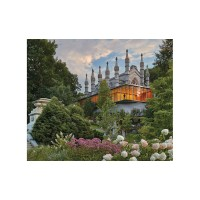
Mount Auburn Cemetery comprises 175 acres and is situated in Watertown and Cambridge near Boston, Massachusetts. Founded in 1831, and now visited by over 200,000 people each year, Mount Auburn is a National Historic Landmark, recognized as the first “rural cemetery” and the inspiration for the American Parks Movement during the 19^th^ century. As an active cemetery, Mount Auburn inspires all who visit, comforts the bereaved, and commemorates the dead in a landscape of exceptional beauty. As an accredited arboretum, Mount Auburn features 5,000 trees and more than 20,000 plants overall.
The Security Department at Mount Auburn Cemetery is seeking an enthusiastic individual to fill the position of Security and Visitor Services Representative. Reporting to the Security Supervisor the Security and Visitor Services Representative is responsible for patrolling the Cemetery grounds throughout the assigned shift and enforcement of Cemetery rules and regulations. The representative displays compassion, sensitivity, and good business ethics in all interactions with clients and visitors.
Option 1: Tuesday – Saturday 10 AM to 6 PM
Mount Auburn Cemetery is an equal-opportunity employer. It does not discriminate in employment opportunities on the basis of race, color, ancestry, religion, gender, national origin, age, pregnancy, citizenship status, physical or mental ability, military status, sexual orientation or any other characteristic protected by law.
Mount Auburn Cemetery has been designated a National Historic Landmark by the Department of the Interior, recognizing it as one of the country's most significant cultural landscapes. Founded in 1831, it was the first large-scale designed landscape open to the public in the United States. Today its beauty, historical associations and horticultural collections are internationally renowned.
Our founders believed that burying and commemorating the dead was best done in a tranquil and beautiful natural setting at a short distance from the city center. They also believed that the Cemetery should be a place for the living, "embellishing" the natural landscape with ornamental plantings, monuments, fences, fountains and chapels. This inspired concept was copied widely throughout the United States, giving birth to the rural cemetery movement and the tradition of garden cemeteries. Their popularity led, in turn, to the establishment of America's public parks.



