
Family Services Specialist II is the full performance level in the occupational group for Family Services. Employees are responsible for developing and implementing individualized service plans involving the application of casework methods in Employment Services and Child Care, and basic service level caseloads of Adult/Adult Protective Services, Child Protective Services, Foster Care, Adoptions. Employees may provide services in all program areas or specialize in one or several program areas. Typically employees perform all tasks independently and only seek supervisory advice on unusual situations or when policies and procedures require supervisory review or involvement. The Family Services Specialist II is distinguished from the Family Services Specialist III by the latter's functioning at the advanced level, and becoming more specialized in program areas and assuming more complex duties (such as: interviewing/investigating in cases involving suspected child/adult abuse/neglect, out-of-home placements, guardianships, emergency protective orders, and adoptions).
Provides after hours on-call coverage and responds to emergencies in child/adult protective services and/or foster care.
Employee must be willing to work in community emergency shelter in the event of a natural disaster or emergency.
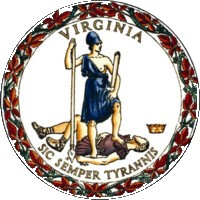
The Commonwealth of Virginia is located in the South Atlantic region of the United States. It was the 10th state to be admitted to the Union on June 25, 1788. Home to approximately 8 million residents, Virginia is the 12th most populous state in the United States. The capital is Richmond, and its most populous city is Virginia Beach.
The narrative history of the Commonwealth of Virginia often begins with the founding of Jamestown in 1607, near what is now modern day Williamsburg, Virginia. Jamestown became the first permanent English settlement in the New World, and the Virginia General Assembly, established on July 30, 1619, is now recognized as the oldest legislative body in the western hemisphere. When Virginia became a royal colony in 1624, the robust tobacco trade that had been developing in Virginia helped establish the American colonies as a powerful economic force. During the American Revolution, Virginia witnessed the final surrender of British forces at Yorktown and later became known as the birthplace of many revolution-era figures and future American presidents, including George Washington and Thomas Jefferson. To date, 8 United States presidents have been born in Virginia, more than in any other state.
The modern government of Virginia is nearly identical in structure to the federal government, and is divided into 3 branches, these being the executive, legislative, and judiciary branches. The Virginia General Assembly is comprised of the 100-member House of Delegates and the 40-member Senate. A governor and lieutenant governor are elected every 4 years. Governors cannot be elected to or serve consecutive terms. Virginia’s judicial system consists of the Supreme Court of Virginia and the Court of Appeals of Virginia, the Circuit Courts, and the lower General District Courts and the Juvenile and Domestic Relations District Courts. Virginia has 13 electoral votes in presidential elections, and possesses 11 seats in the U.S. House of Representatives.



