
A Family Services Specialist I in the Family Childcare Home Unit monitors practices in family child care programs to ensure the safety and well-being of children. The incumbent uses guided inspections to monitor whether family child care programs meet regulations. These inspections may include full compliance monitoring, where all regulations are monitored on a set schedule, or differential monitoring, where the depth and frequency of inspections vary based on a program's history of compliance with licensing regulations. As an FCC monitor, your role involves both logistic organization and oversight, as well as the less tangible but equally important responsibilities of creating and sustaining a working environment and relationship that is welcoming and supportive. It is also your responsibility to ensure that providers are aware of and adhere to program policies and procedures, including inspection requirements. This means that your job is to create and sustain both the organizational systems and the culture of the FCC programs you support. While you may support families and children in both direct and indirect ways, you will also help ensure that FCC providers have the support they need to be successful business owners and provide a healthy and safe environment for children to play and learn. The level of support you offer will vary from home to home and should be individualized for each provider.
Examples of Duties:
Bachelor’s degree in a human services field and some relevant experience.
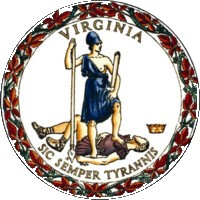
The Commonwealth of Virginia is located in the South Atlantic region of the United States. It was the 10th state to be admitted to the Union on June 25, 1788. Home to approximately 8 million residents, Virginia is the 12th most populous state in the United States. The capital is Richmond, and its most populous city is Virginia Beach.
The narrative history of the Commonwealth of Virginia often begins with the founding of Jamestown in 1607, near what is now modern day Williamsburg, Virginia. Jamestown became the first permanent English settlement in the New World, and the Virginia General Assembly, established on July 30, 1619, is now recognized as the oldest legislative body in the western hemisphere. When Virginia became a royal colony in 1624, the robust tobacco trade that had been developing in Virginia helped establish the American colonies as a powerful economic force. During the American Revolution, Virginia witnessed the final surrender of British forces at Yorktown and later became known as the birthplace of many revolution-era figures and future American presidents, including George Washington and Thomas Jefferson. To date, 8 United States presidents have been born in Virginia, more than in any other state.
The modern government of Virginia is nearly identical in structure to the federal government, and is divided into 3 branches, these being the executive, legislative, and judiciary branches. The Virginia General Assembly is comprised of the 100-member House of Delegates and the 40-member Senate. A governor and lieutenant governor are elected every 4 years. Governors cannot be elected to or serve consecutive terms. Virginia’s judicial system consists of the Supreme Court of Virginia and the Court of Appeals of Virginia, the Circuit Courts, and the lower General District Courts and the Juvenile and Domestic Relations District Courts. Virginia has 13 electoral votes in presidential elections, and possesses 11 seats in the U.S. House of Representatives.



